Are My Old Coins Worth Anything? How to Tell What You Have
You found a jar of old coins in a drawer. Or a folder tucked in a closet your dad never talked about. Or maybe a coffee can in the garage full of pennies that look wrong. Now you're staring at them wondering if you're holding spare change or a savings account.
Here's the honest answer.
The Quick Answer
Most old coins are worth a little more than face value. Some are worth a lot more. A handful are worth more than your car. The difference comes down to four things: what year it was minted, where it was minted, how rare it is, and what condition it's in. You can rule out the ordinary stuff in a few minutes - and zero in on anything that deserves a closer look.
The single most common source of real value in old coin collections? Pre-1965 silver coins. Every U.S. dime, quarter, and half dollar minted in 1964 or earlier is 90% silver. With silver around $84 per ounce, a single pre-1965 quarter is worth roughly $15 just for the metal. A jar full of them adds up fast. Check the dates first. That's your quick win.
Now let's talk about the coins that could be worth real money.
What Makes a Coin Valuable?
Year and Mint Mark
Every U.S. coin has a date stamped on the front. Most also have a tiny letter - a mint mark - that tells you where it was made. D means Denver. S means San Francisco. No letter usually means Philadelphia.
Some year-and-mint combinations are common. Others are shockingly scarce. A 1964 Kennedy half dollar? Worth about $30 in silver melt. A 1964 Accented Hair Kennedy from a special proof run? That's $30 to $75 depending on condition. Same year. Different coin.
The mint mark is small - sometimes barely visible. Grab a magnifying glass before you sort anything.
Rarity
Fewer coins minted usually means higher value. The U.S. Mint publishes mintage numbers for every coin ever struck. A 1931-S Lincoln penny had a mintage of just 866,000. Sounds like a lot, but most years produced hundreds of millions. That 1931-S penny sells for $75 to $200 depending on condition.
But mintage is only half the story. What matters is how many survived. Millions of coins get spent, damaged, lost, or melted down. A coin with a high mintage but a low survival rate can be worth just as much as one that was barely produced.
Condition
This is the big one. A tiny difference in wear can mean a massive difference in price. Think of it like car mileage - a 1965 Mustang with 20,000 miles is worth a lot more than one with 200,000.
A 1916-D Mercury dime in well-worn condition: about $800. In near-perfect uncirculated condition: over $40,000.
Same coin. Same year. Same mint. The only difference is how much it's been handled.
Errors and Varieties
Sometimes the Mint makes mistakes. And those mistakes can be worth a fortune.
The 1955 doubled die Lincoln penny happened when a die was struck twice at slightly different angles. The doubling is visible to the naked eye - the date and lettering look like they have shadows. About 20,000 to 24,000 entered circulation before anyone noticed. Today they sell for $1,000 in worn condition to over $100,000 in top grades.
Not every weird-looking coin is a valuable error. Circulation damage can mimic real errors. But if something looks genuinely strange - doubled text, off-center strikes, wrong metal - it's worth investigating.
The Most Valuable Coins to Look For
1. Pre-1965 Silver Coins (Any Denomination)
Before 1965, U.S. dimes, quarters, and half dollars were 90% silver. After 1964, the Mint switched to copper-nickel clad. Any pre-1965 coin in these denominations is worth at least its silver melt value.
Current approximate melt values (fluctuates with silver price):
Pre-1965 dime: ~$6.00
Pre-1965 quarter: ~$15.00
Pre-1965 half dollar: ~$30.00
1965–1970 half dollar (40% silver): ~$12.00
How to identify them: Check the date. 1964 or earlier on a dime, quarter, or half dollar means silver. You can also check the edge - silver coins have a uniform silver edge, while post-1964 clad coins show a copper stripe.
How common: Very common in old collections. This is the most likely source of real value in most coin jars. A roll of 40 pre-1965 quarters is worth roughly $600 in melt value alone.
2. 1943 Copper Lincoln Penny
The Mint switched to steel pennies in 1943 to save copper for World War II shell casings. But a few copper blanks were left in the presses from the previous year. About 40 copper 1943 pennies are known to exist. They weren't supposed to.
Value: $150,000 to $400,000+
How to identify it: It looks like a normal penny, but it's copper-colored instead of the silver-gray steel that all 1943 pennies should be. Use a magnet - steel pennies stick. Copper ones don't.
How common: Extremely rare. Most "copper 1943 pennies" are steel pennies someone copper-plated (worthless as a rarity) or 1948 pennies with a worn date. True copper 1943 pennies are museum-grade finds. But they do exist - and they've been found in pocket change.
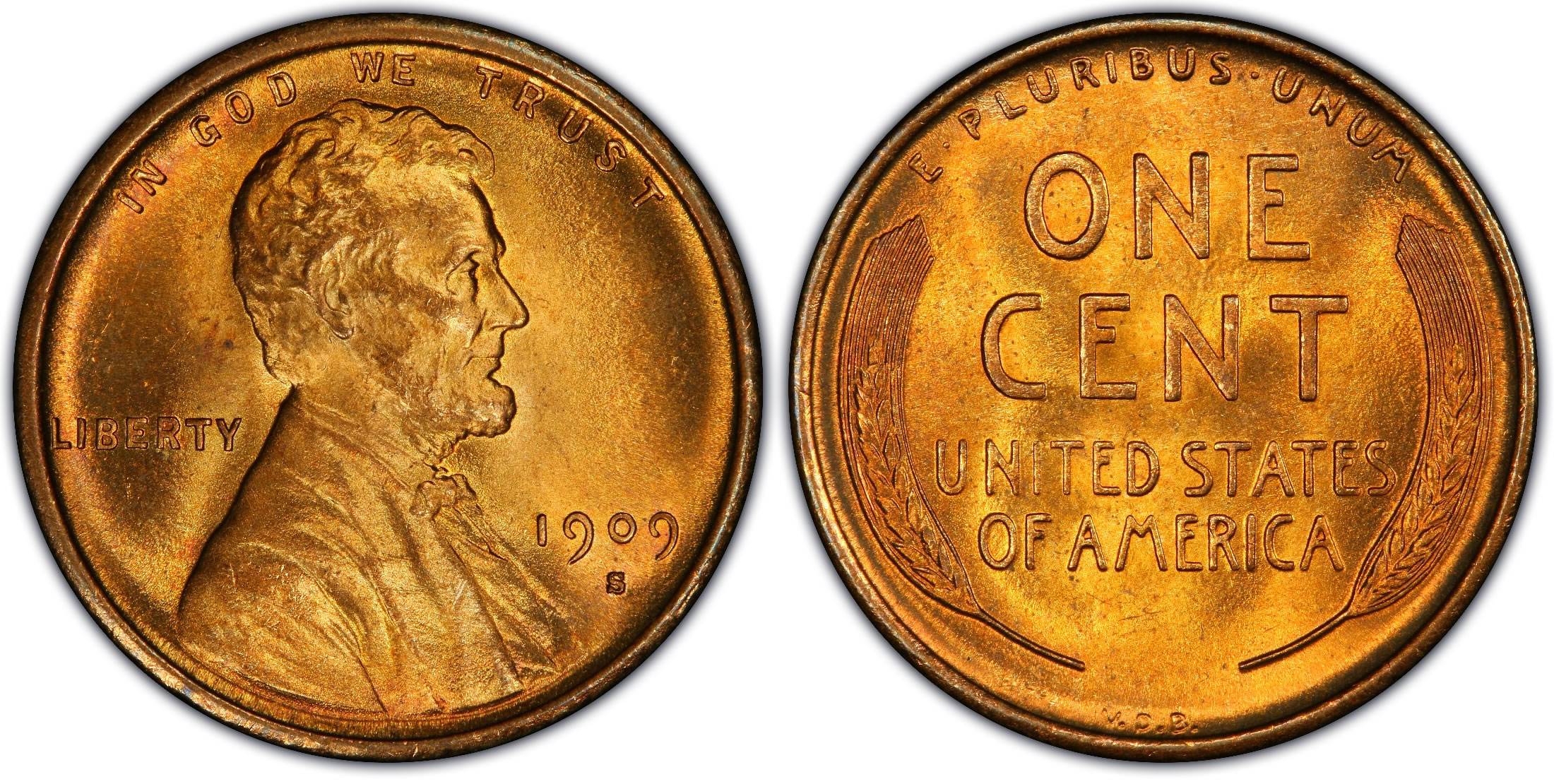
3. 1909-S VDB Lincoln Penny
The first year of the Lincoln penny. The designer, Victor David Brenner, put his initials - VDB - on the reverse. The public complained it was too prominent, and the Mint removed them after a short run at San Francisco. Only 484,000 were struck with both the S mint mark and the VDB initials.
Value: $800 to $2,000+ in circulated grades. Up to $100,000+ in pristine uncirculated condition.
How to identify it: Look for "VDB" in small letters at the bottom of the reverse, below the wheat stalks. Check for the "S" mint mark below the date on the obverse.
How common: Scarce but not impossible. Collectors have known about this coin for over a century, so many have been preserved. They still turn up in inherited collections.
4. 1916-D Mercury Dime
Only 264,000 Mercury dimes were minted in Denver in 1916 - the lowest mintage of any coin in the series. It's the key date every Mercury dime collector needs and most can't afford.
Value: About $800 in well-worn condition. $5,000 to $10,000 in Fine to Very Fine. $40,000+ in uncirculated grades.
How to identify it: Look for the small "D" mint mark on the reverse, to the left of the fasces. The date must clearly read 1916. Be careful - 1916 Philadelphia (no mint mark) and 1916-S dimes are common and worth much less.
How common: Rare enough that counterfeits are everywhere. If you think you have one, get it authenticated by PCGS or NGC before doing anything else.
5. 1955 Doubled Die Lincoln Penny
One of the most dramatic errors in U.S. coinage. The date, "LIBERTY," and "IN GOD WE TRUST" are all clearly doubled, shifted slightly upward. You can see it without magnification.
Value: $1,000 in About Good condition. $5,500 to $18,500 in uncirculated. The auction record: $125,000 for a PCGS MS-65 Red.
How to identify it: The doubling is visible to the naked eye. If you need a loupe to see it, it's probably machine doubling - a different, far less valuable phenomenon.
How common: About 20,000 to 24,000 entered circulation. They've been hunted for 70 years, but they still surface in old collections.
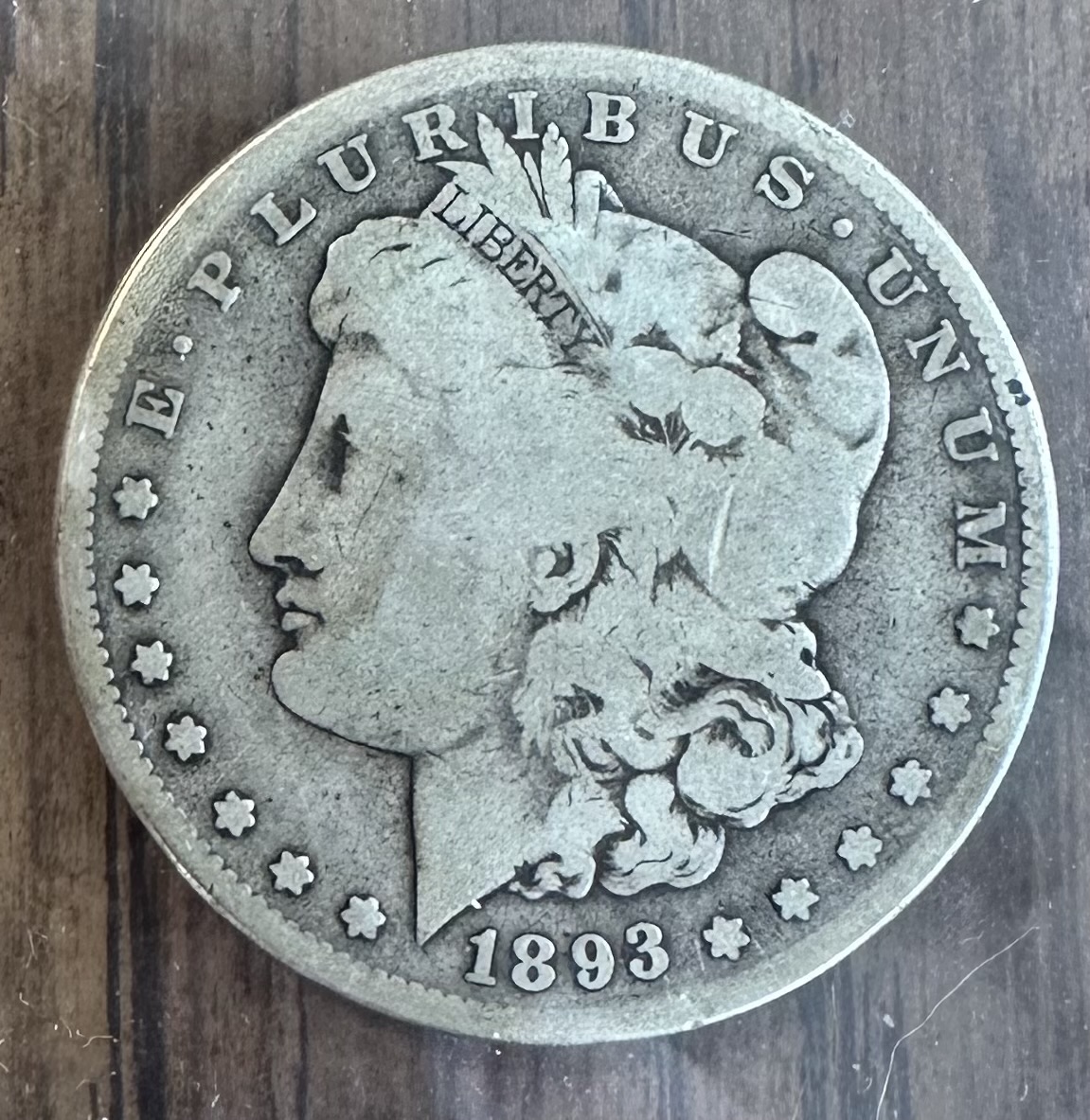
6. 1893-S Morgan Silver Dollar
Morgan dollars are the big, heavy silver coins many people picture when they think "old coins." Most common-date Morgans are worth $30 to $80. But the 1893-S had a mintage of only 100,000 - the lowest of any Morgan dollar.
Value: $3,000 to $6,000 in circulated grades. $230,000+ in uncirculated condition.
How to identify it: Date on the front, "S" mint mark on the reverse above the "DO" in "DOLLAR."
How common: Very rare. Most Morgan dollars in old collections are common dates. Check every one, but don't expect to find an 1893-S.
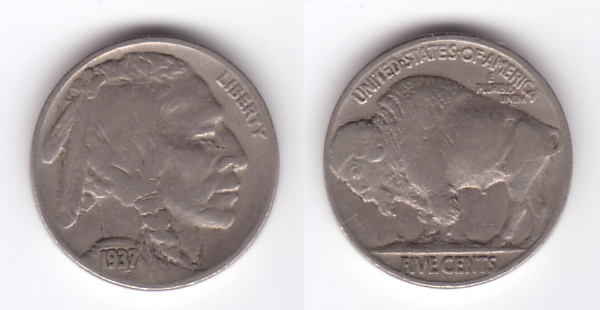
7. 1937-D Three-Legged Buffalo Nickel
A Mint worker in Denver over-polished a worn die, accidentally grinding away the front right leg of the buffalo on the reverse.
Value: About $685 in Very Fine. $2,500 to $26,000 in uncirculated. Auction record: $99,875 for an MS-66+.
How to identify it: The front right leg is completely missing. There should also be visible pitting where the leg was polished away. If the leg is just worn smooth from circulation, that's not the same thing.
How common: A few thousand survive. They show up in collections fairly regularly.
8. 1932-D and 1932-S Washington Quarters
The first year of the Washington quarter. Denver made just 436,800 and San Francisco made 408,000. Every other year had mintages in the tens of millions.
Value: 1932-D: $100 to $3,000+. 1932-S: $80 to $2,500+. Depending on condition.
How to identify them: Check the reverse for a "D" or "S" mint mark below the eagle's tail feathers.
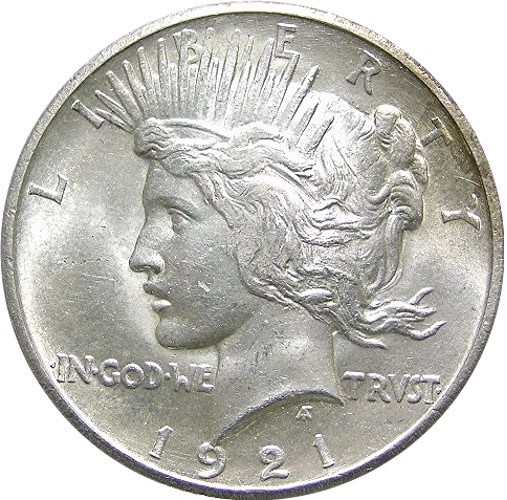
9. 1921 Peace Dollar (High Relief)
The first year of the Peace dollar was struck in high relief - a sculptural design that made the coins hard to stack. The Mint switched to lower relief in 1922. All 1921 Peace dollars are the high-relief version.
Value: $100 to $500+ in circulated grades. $1,000+ in uncirculated.
How to identify it: If it's a Peace dollar and the date says 1921, you have one. Over a million were made - not rare, but always in demand.
10. 1969-S Doubled Die Lincoln Penny
Similar to the 1955, but far rarer. The doubling is most visible on "LIBERTY" and "IN GOD WE TRUST." When these first surfaced, the Secret Service confiscated some - they thought they were counterfeit.
Value: $25,000 to $100,000+
How to identify it: Strong doubling on the obverse lettering. Must have an "S" mint mark below the date.
How common: Fewer than 100 confirmed. Needle-in-a-haystack territory. But one was found in pocket change in 1970.
How to Tell If Yours Is Real
Counterfeits exist for every valuable coin on this list. Here's how to protect yourself.
Weight and size. Every U.S. coin has a precise weight and diameter. A kitchen scale that reads to 0.1 grams can catch many fakes. A 1943 copper penny should weigh about 3.1 grams. If yours weighs 2.7, it's a copper-plated steel penny.
The magnet test. Steel sticks to magnets. Copper, silver, and nickel don't. If your "silver" coin jumps to a magnet, something's wrong.
Look at the details. Genuine coins have sharp, consistent lettering. Counterfeits often have mushy details or uneven letter spacing. Compare yours to photos of authenticated examples.
The edge. Pre-1965 silver coins have a uniform silver edge. Post-1964 clad coins show a copper stripe. If someone's selling you a "silver" quarter with a copper edge, it's clad.
When to go professional: If you think you have anything worth more than $200, submit it to PCGS or NGC for authentication and grading. Cost: $20 to $65 for coins under $3,000 in value. It's the best money you'll spend - graded coins sell for significantly more than ungraded ones.
Condition Matters More Than You Think
Coin condition is measured on a 1-to-70 scale called the Sheldon scale. Here's what matters in plain language:
Poor to Good (1–6): Heavily worn. You can tell what it is, but the fine detail is gone. A penny that lived in cash registers for 50 years.
Fine (12–15): Moderate wear. Major features are clear. Letters are readable. The highest points - hair, feathers, letter edges - are worn smooth.
Extremely Fine (40–45): Light wear on only the highest points. Most original detail is sharp. A coin someone used for a while, then pulled out and saved.
About Uncirculated (50–58): Barely worn. Only the very tips of the design show friction. Often looks uncirculated at first glance.
Mint State (60–70): No wear at all. MS-60 might have bag marks from jostling in Mint bags. MS-65 is gem quality. MS-70 is theoretically perfect and almost never happens for older coins.
The price jumps between grades are enormous. A common Morgan dollar in Fine: about $40. In MS-65: $200 to $500+. For rare dates, the multiplier gets absurd.
The most important rule: don't clean your coins. Cleaning removes the original surface - the toning and patina - and destroys value. A dark, naturally toned coin is worth far more than a shiny one that's been polished. Collectors and grading services spot cleaning immediately. Leave them alone. Even if they look dirty. Especially if they look dirty.
What to Do Next
Want a quick estimate? Upload a photo of your coin to Curio Comp. Our AI identifies the coin, estimates the condition, and gives you a value range in seconds. It's free, and it works from your phone. Upload a photo →
Think you have something valuable? If your coin matches any of the items above, consider submitting it to PCGS or NGC for professional grading. The cost is small relative to the difference in selling price between raw and graded coins.
Got a whole collection? Don't go through hundreds of coins one at a time. Upload your collection to Curio Comp - we'll sort the treasure from the stuff and tell you where to focus.
Want to learn more? Dive into our detailed guides:
Morgan Silver Dollars - Value by Year and Mint Mark
Pre-1965 Silver Coins - What They're Worth in Silver
Common Questions
Should I clean my old coins?
No. Almost never. Cleaning removes the original surface and collectors strongly prefer natural patina - even if it looks like dirt to you. A cleaned coin can lose 50% or more of its value. The only exception: if a coin is covered in something actively corrosive, a professional conservator - not you - should handle it.
Are wheat pennies worth anything?
Most wheat pennies (1909–1958) are worth 3 to 15 cents each. Billions were made. But certain dates are worth real money: the 1909-S VDB ($800+), the 1914-D ($200+), the 1931-S ($75+), and the 1955 doubled die ($1,000+). Check every date before dismissing a pile of wheat cents.
Where's the best place to sell old coins?
It depends on what you have. Common coins and silver melt sell well on eBay or at local coin shops - just get multiple offers, because the first shop will lowball you. For valuable coins ($500+), auction houses like Heritage Auctions or Stack's Bowers attract serious collectors and pay top prices. Getting coins graded before selling almost always increases your net return.
Are old foreign coins worth anything?
Some are, but most old foreign coins in U.S. collections are common circulation pieces worth a few cents to a few dollars. Exceptions: gold coins of any origin, silver coins with significant metal content, and genuinely rare dates. If you're not sure, upload a photo to Curio Comp.
How do I know if my coin is silver?
For U.S. coins: dimes, quarters, and half dollars dated 1964 or earlier are 90% silver. Half dollars from 1965–1970 are 40% silver. War nickels dated 1942–1945 with a large mint mark above Monticello are 35% silver. Check the edge - silver shows a uniform color, clad shows a copper stripe.
Are bicentennial quarters (1776–1976) worth anything?
The dual-dated quarters with the drummer were made in huge quantities - over 1.6 billion. Circulation examples are worth 25 cents. The 40% silver versions from special collector sets with an "S" mint mark are worth $5 to $12.
My coins are in a blue Whitman folder. Does that matter?
The folder itself isn't worth much. But it tells you someone was actively collecting - checking dates, saving better coins. Go through it date by date. Pay attention to the empty slots - those are often the valuable dates nobody could find. If someone filled them, the whole set might be worth more than the sum of its parts.
Last updated: February 2026. Coin values based on recent auction results and price guide data. For a current estimate on your specific coins, upload a photo to Curio Comp.
Coins Value Guides
Coins Value Guides
Explore More Coins













Want to Know What Your Collection Is Worth?
Our AI appraisal tool is coming soon. Upload photos, get instant identification and valuation.
Get Appraisal